Serengeti calving season: a guide to a December–March safari
Serengeti and Ndutu calving season: when it usually happens, what to expect from December to March, how to plan the route and what to ask for in the proposal.
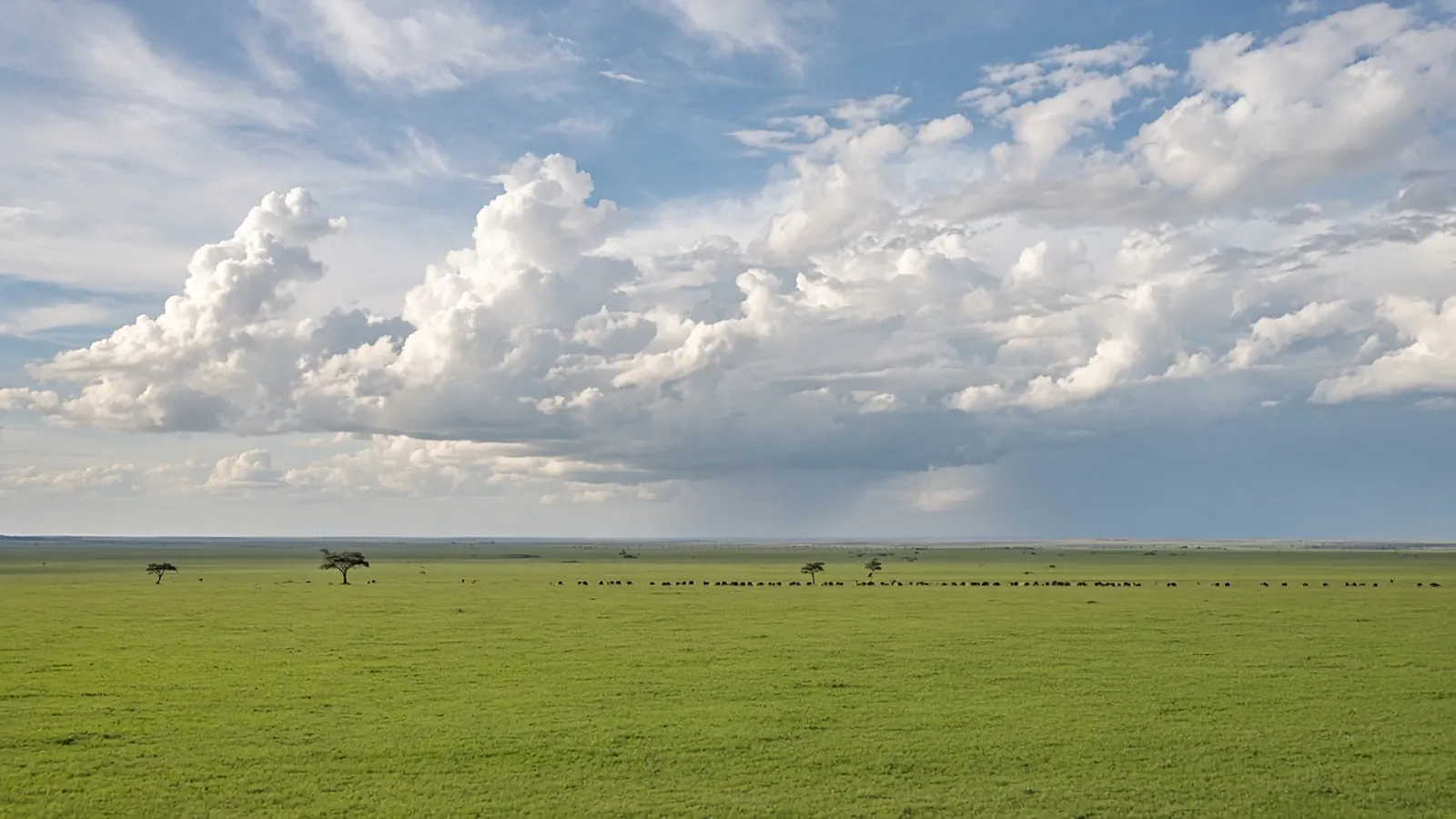
From December to March, the southern Serengeti and the Ndutu plains host one of the most intense moments of the year: the wildebeest calving season. It is not Mara River crossing time, but for many travellers — and for many who return for a second safari — it is just as memorable: green plains, huge herds and predators on open ground.
If you are planning a winter or early-spring trip, this guide helps you place the dates, understand what usually happens month by month and fit the southern Serengeti into a northern Tanzania route. One essential caveat: the migration follows the rains, and no serious itinerary can guarantee births or specific sightings.
What calving season is
The Great Migration cycle in the south
The Great Migration is a continuous movement of wildebeest, zebra and gazelle across the Serengeti–Masai Mara ecosystem. After the short rains, the herds usually gather in the southern Serengeti and at Ndutu, in the Ngorongoro Conservation Area, where short, mineral-rich grasses favour mothers and calves.
That is where much of the next wildebeest generation is born in a short, synchronised window. When the year cooperates, wildlife density soars for a few weeks: calves, predators and open country that makes game viewing from the vehicle easier.
How it differs from the Mara crossings
Mara River crossings are usually linked to the northern Serengeti and the Masai Mara between July and October, depending on the year. Calving is another phase of the same cycle: further south, on a different calendar, with a different kind of scene. If crossings are your priority, the south in February is not the natural fit. If you want herds, predators and open-plain photography, it is.
More park context in our Serengeti guide and the northern circuit of Tanzania.
When it usually happens: December to March
December: arrival and gathering
In December the herds are usually arriving or already settling in the south. It is not always the month with the most births; often it is the month of new grass and green scenery after the short rains. It pairs well with end-of-year dates — see also Christmas and New Year safari.
January: the first births
January usually marks the clearer start of calving. In many years the herds are already on the southern and Ndutu plains. It is a strong choice if you want the calving atmosphere with a little less booking pressure than February, though small camps are still limited.
February: the usual peak
In most seasons February brings the highest concentration of births and of predators around the herds. Demand for Ndutu and southern Serengeti beds is high: lock dates early and stay flexible on lodge or exact nights.
March: mobile calves and the start of movement
By March many calves are already running with the herd. The spectacle can still be excellent, but depending on rain and grass the herds may begin shifting toward the central and western Serengeti. March can be outstanding; it is not a guaranteed February under another name.
Why we speak in conditionals
Exact dates move with the rains. That is why a proposal talks about target zones and a plan B within northern Tanzania, not about promising a birth at a set time.
Where to stay and how to move
Ndutu and the southern Serengeti
Ndutu sits on the practical border between the national park and the Ngorongoro Conservation Area. In calving season many itineraries favour camps or lodges well placed for the short-grass plains. The most active pocket changes week to week: a local guide and an operator with fresh field information make the difference.
In parts of the Ndutu area, off-road driving with a guide is often allowed, which helps position the vehicle respectfully near the herds. Exact rules depend on the zone and current regulation; your proposal should state what is and is not possible.
How it fits with the crater and the circuit
A calving-only route makes sense if that scene is your priority. In practice most travellers combine several nights in the south / Ndutu with the Ngorongoro Crater and, depending on length, Tarangire or the central Serengeti. The crater brings resident wildlife all year and balances the trip if the herds have moved.
Light aircraft or road
To maximise time in the calving zone, an internal flight or light aircraft to a nearby airstrip usually saves long road hours. If you prefer to stay on the ground, allow for long transfer days. Details in safari bush flights.
What you usually see (without promises)
In a good calving year you will see dense herds, calves hours or days old, and protective mothering behaviour. You do not need to witness a birth live for the trip to be worthwhile.
Lions, hyenas and cheetahs are often more visible when herds concentrate on open plains. That does not guarantee a sighting every morning; it does create a favourable context. If photography comes first, ask for a private vehicle and an unhurried guide; practical basics are in safari photography tips.
How to plan dates, nights and tier
How many days in the south
The usual approach is several consecutive nights in Ndutu / the south, not a single overnight stop. That way you can follow the herds' daily shifts. The full Tanzania trip often sits in the range of our 7–10 day itinerary, adjusted to your real holiday.
Mid-range / Luxury / Ultra-luxury
We work with three tiers: Mid-range / Luxury / Ultra-luxury. At Ndutu the difference is not only comfort: it is also location relative to the active plains and the size of the camp. In peak dates, combining nights in two tiers can be better than giving up the area. More in safari lodges vs camps.
What the proposal should say
- Target zone (southern Serengeti, Ndutu or other) and an alternative if the herds have moved.
- Nights in that zone and whether the vehicle is private or shared.
- Whether there is a light aircraft or internal flight, transfers and baggage limit.
- Which park and conservation fees are included.
- Payment and cancellation terms in a high-demand season.
Also read what a safari includes and questions before booking.
Price without generic figures
The real cost depends on dates, nights, tier and flight logistics. The starting price is in our Tanzania safari price guide. For the wider frame, see how much a safari costs. A month-by-month breakdown will come in the safari price by season article once it is live.
Best time overall vs this window
Our best time for a safari guide compares whole seasons. Calving is a specific window: ideal if your dates fall between December and March and you care about the south. If you can only travel in July or August, the focus shifts north to the crossings.
Kenya on those same dates remains excellent for resident wildlife, but the classic migration calving scene is in Tanzania. If you are choosing between countries, start with Kenya or Tanzania.
Common mistakes
- Booking a single night in the south and expecting to see everything.
- Confusing calving with Mara River crossings.
- Choosing a lodge from a photo without checking its location.
- Travelling only by road with too few days and losing game time to transfers.
- Asking for guarantees of a live birth or a hunt.
- Leaving February to the last minute.
FAQ
When is calving season exactly?
It usually runs from December to March in the southern Serengeti and Ndutu, with births peaking around February in most years. Rainfall shifts the exact timing.
Will we definitely see a wildebeest give birth?
It cannot be guaranteed. Many travellers see very young calves and intense activity; a live birth is possible, not promisable.
Is Ndutu inside the Serengeti?
It sits on the contact zone between the national park and the Ngorongoro Conservation Area. In practice it is visited as part of the southern Serengeti ecosystem.
How many days do we need?
Several nights in the calving area inside a wider northern Tanzania safari. A single night is usually too short.
Which tier should we choose?
Mid-range, Luxury or Ultra-luxury depending on comfort, location and budget. In peak dates, availability matters as much as preference.
What about the price?
It varies by dates, nights and tier. See Tanzania safari price and request a proposal for your dates.
Tell us when you travel and request your proposal
Tell us which dates you have between December and March, how many of you are travelling, whether calving is the priority or you want a wider circuit, and which tier suits you: Mid-range / Luxury / Ultra-luxury. We will cross-check real herd conditions with the local operator and build an honest southern Serengeti route. Request your proposal early: in February, the best camps book ahead.
Related reading
- Rwanda gorilla safari: mountain gorillas and logistics
A Rwanda safari: gorillas in Volcanoes National Park, the permit, logistics from Kigali, savanna and forest, and what to ask for in the proposal.
- 4-day Kenya safari from Nairobi
A 4-day Kenya safari from Nairobi: what genuinely fits, how to split nights between the Mara, Amboseli or Nakuru, and what to ask for in the proposal.
- Multigenerational safari: grandparents, parents and children
A safari with grandparents, parents and children: shared pace, vehicle, lodging and what to ask for in the proposal so the trip works for all three ages.