Safari in January: what to expect and how to organise it
Safari in January in Kenya or Tanzania: weather after the short rains, wildlife, southern Serengeti calving and how to build the proposal.
January is one of the most interesting — and sometimes most underrated — months for an East African safari. The Christmas peak has passed, the plains are often still green after the short rains and, in Tanzania, calving season in the southern Serengeti is underway or about to intensify.
This guide covers climate, wildlife, routes that fit and how to request a realistic proposal. It complements best time and green season with a January-only focus.
Weather: end of the short rains and green scenery
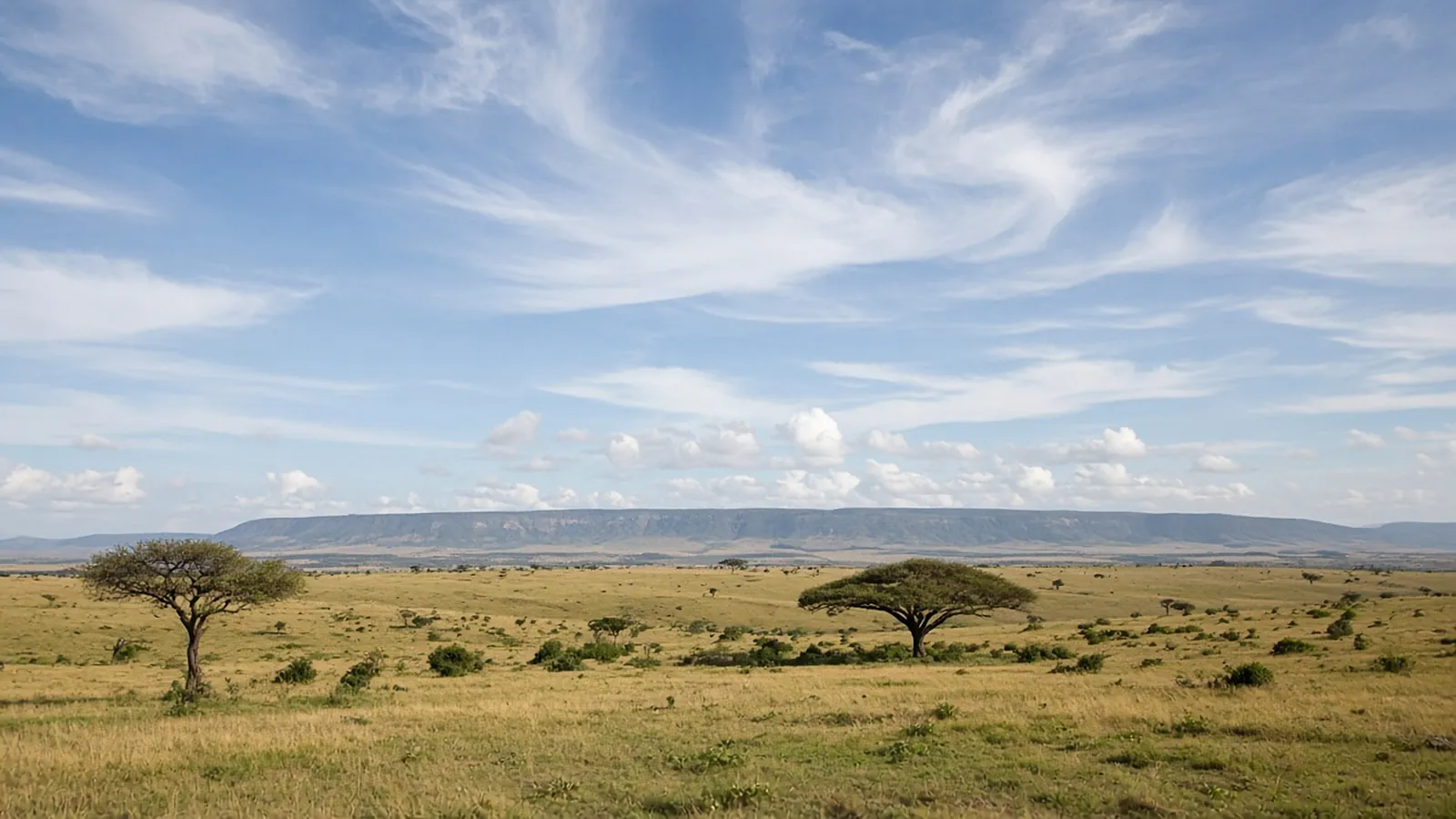
Across much of Kenya and northern Tanzania, November and December bring the short rains. January is usually more settled, with clear mornings and the chance of isolated showers depending on the year. The landscape tends to stay green, with less dust than deep dry season.
Nobody can guarantee the weather in a given week: a wet or dry January can shift herds and plans. Pack a light waterproof and a warm layer for dawn drives — what to wear on safari.
Wildlife in January
Tanzania: southern Serengeti and Ndutu
January is, in many years, the clear start of wildebeest calving in the southern Serengeti and Ndutu. Herds are usually concentrated; births rise toward February. If that is your goal, read the Serengeti calving season guide and the Great Migration. The Serengeti and northern circuit remain the route base.
Kenya: resident wildlife and short formats
In Kenya, January offers solid resident wildlife in the Masai Mara, Amboseli, Samburu or Nakuru. The big migratory herds are not in the Mara in January; do not look for them there this month.
Predators and photography
Grass is not yet as high as in the peak long rains, light is pleasant and — in the southern Serengeti — prey is concentrated. A good month for photography if you accept variable skies. Tips in safari photography.
How to build the route
If calving is the priority
Several nights in Ndutu / the south + Ngorongoro and, if days allow, Tarangire. Use a light aircraft if you want to maximise time. Usual length: the 7–10 day range.
If Kenya is the priority
A classic Mara or Amboseli, or a short combo from Nairobi. January fits very well with the 5-day Kenya safari from Nairobi; for more days, use the Kenya itinerary as a base.
Safari and beach
January is still a relatively good beach month in Zanzibar on climate, but this article does not sell a package: if you want to add coast, say so in the proposal and review factors in safari and beach without assuming availability or price.
Logistics from Spain in January
January often has decent flight supply to Nairobi or Kilimanjaro/Arusha after the Christmas peak, but international fares are still European winter high season. Book the international flight with margin and align the first internal transfer to the next day if you arrive late. Access guide: how to get there from Spain. Visas and health: visas, vaccinations, malaria.
If you combine northern Tanzania, decide early whether you sleep the first night near Arusha or fly straight to a southern airstrip: in January every afternoon in Ndutu counts.
Demand and booking
After the Christmas peak there is a little more air than in late December, but good Ndutu camps remain sought after. It is not “any lodge at the last minute”. If you come from reading Christmas and New Year and your dates fall in January, still move with reasonable lead time.
January vs December and February
December carries holidays and often more residual rain; February usually concentrates the calving peak. January sits in between: less festive pressure at some Kenya lodges, and already a calving atmosphere in Tanzania without necessarily being the tensest day of the year. If your holiday can flex across these three months, decide on wildlife priority (calving yes/no) and lodge flexibility, not only on price.
Families, couples and first safari in January
January suits families who can travel after the year-end holidays, and couples who want to avoid New Year noise at camp. With children, prioritise fewer lodge changes and a private vehicle — safari with kids. If it is a first safari, January in Kenya (Mara or Amboseli) is a gentle entry; if you already want migration energy, southern Tanzania is the natural step.
Photography and daily rhythm in January
Cool dawns, a chance of dramatic cloud and, in the southern Serengeti, predator action on open ground. Ask for early departures, a workable roof or wide side windows, and time to stay with a scene without rush. A private vehicle helps. Photography tips.
Price in January
January behaves, in many calving zones, as high or high-shoulder season. Elsewhere, as a post-holiday shoulder. Factor detail sits in the safari price by season article and in the Kenya and Tanzania guides. Tiers: Mid-range / Luxury / Ultra-luxury.
Quick list before quoting January
- Exact international arrival and departure dates.
- Priority: calving, resident wildlife, or a mix.
- Nights available after allowing for time-zone shift.
- Desired tier: Mid-range / Luxury / Ultra-luxury.
- Interest in light aircraft versus all by road.
- If you want beach time, say so without assuming a closed package — safari and beach.
With that we can check real availability. Support: choose a local operator.
What to ask for in the proposal
- January target zone and an alternative if rains have moved the herds.
- Nights per park and vehicle type.
- Light aircraft or road, with baggage limits.
- Fees included and cancellation terms.
See what a safari includes and questions before booking.
Common January mistakes
- Looking for Mara River crossings in Kenya.
- Booking a single night in the southern Serengeti “to see calving”.
- Travelling without a waterproof layer because “January is already dry”.
- Mixing too many parks in a few days because “there is space”.
FAQ
Is January a good time?
Yes, especially if you like green scenery and, in Tanzania, the start of calving. Each year shifts with the rains.
Kenya or Tanzania in January?
Tanzania if you prioritise migration/calving; Kenya if you want short routes and resident wildlife. Kenya or Tanzania.
Does it rain a lot?
It usually rains less than in November–December, but showers can still come. No guarantees.
How much does it cost?
It depends on area and tier. Check the price guides and request a proposal for your specific January dates.
Tell us your January dates and request your proposal
Tell us which January days you have, whether you prefer Kenya, Tanzania or both, whether calving matters and which tier: Mid-range / Luxury / Ultra-luxury. We adjust the route to the current year with the local operator. See also the Kenya safari price and Tanzania safari price guides. Request your proposal.
Related reading
- Rwanda gorilla safari: mountain gorillas and logistics
A Rwanda safari: gorillas in Volcanoes National Park, the permit, logistics from Kigali, savanna and forest, and what to ask for in the proposal.
- 4-day Kenya safari from Nairobi
A 4-day Kenya safari from Nairobi: what genuinely fits, how to split nights between the Mara, Amboseli or Nakuru, and what to ask for in the proposal.
- Multigenerational safari: grandparents, parents and children
A safari with grandparents, parents and children: shared pace, vehicle, lodging and what to ask for in the proposal so the trip works for all three ages.